

by Lloyd Frazier
 Before I begin, I just want to make some things known about my skills in paint cleaning and perfecting. I have been my own personal detailer since I have been driving. Let’s just say my start began sometime early in Nixon’s second term and Watergate was all the hubbub. Many years later I attended a professional detailer training class at Detail King, just outside of Pittsburgh, back in spring of ‘04. The first day was business training. I really didn’t go for that as much as wanting some real hands-on professional training on the actual detailing of the automobile. The second day consisted of hands on training. After that training, I actually felt comfortable enough to introduce a rotary buffer and orbital polisher into my personal detailing processes. I have detailed nearly 100 cars at the professional level in my own part-time business since then.
On day two of the training we started with the beginning process of washing the exterior. In my opinion, this is probably the most important part. It is the foundation that allows the rest of the processes to proceed smoothly. You must make sure you have removed every little grain of dirt, bug splatter, tar, or whatever else wants to cling to the paint. You should even feel comfortable eating off of its surface. That is a bit extreme but you get my point.
The next part of the process is deep cleaning and polishing the paint surface with a good quality polish applied with a rotary buffer. Using a rotary buffer can really screw up a paint job if you haven’t done your due diligence getting the paint as clean as possible. If you are new to a rotary buffer, I highly recommend that you have someone with experience mentor you or seek some training. It will pay dividends big time. Even watching YouTube videos will give you some idea of how to handle a rotary buffer. You will get pointers on the rotational speed settings, types of buffer pads and their purpose, and buffer handling techniques. A cheap, easy way to test your skills is to practice on an old car hood painted close to the type and color of the paint that is on your personal vehicle. Better to wipe out the paint job on that practice hood than on your precious ride.
Finally, you want to protect the surface with a good quality wax or sealant. This protects the paint and keeps it looking good for weeks or months depending on the weather conditions in your area.
The final processes of detailing the exterior deals with treating the plastic trim and tires, cleaning the glass, and polishing the chrome and aluminum. If you have a convertible, you will be dealing with different types of vinyl or cloth materials as well.
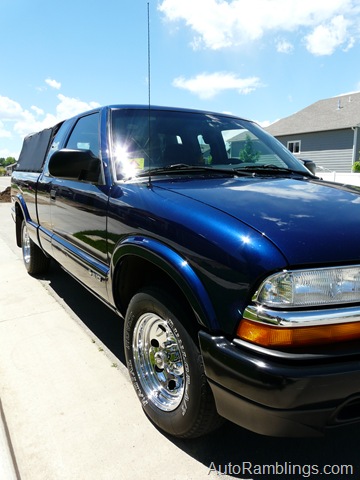 Doing all of this to a car or truck does take time and effort, but the end results are worth it. As you get more practice, the processes become fairly routine and you may actually enjoy the work. For some, like me, it is very therapeutic and you may even obtain a Zen type experience over the years. There are some great benefits of keeping your vehicle looking its best. The above picture is my ‘02 S10 pickup. I have owned it since new and have buffed it 6 or 7 times in the course of those years. Keeping the paint at its optimum makes it easy to keep clean between those polishing, glazing, and waxing processes. With the right soap, dirt will float right off the surface. Using a quick detailing spray after every wash will maintain the shine and help prolong the life of the wax or sealant.
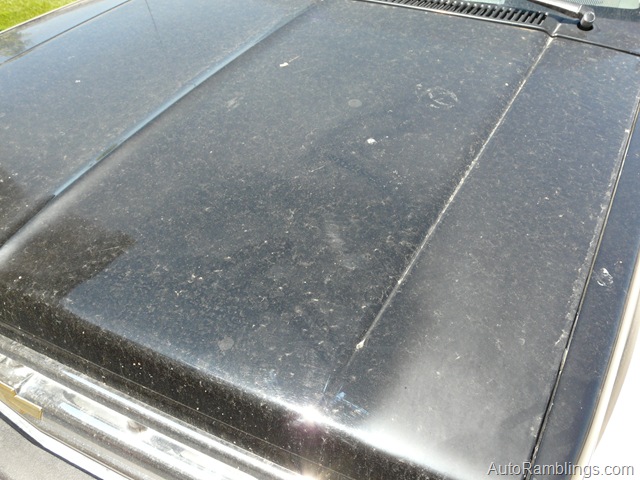 In this post, I will be focusing entirely on the paint cleaning, polishing, glazing, and sealing stages I used on the 94 S10 Blazer that is pictured at the beginning. Click on the picture to get a larger view of the vehicle. You will see that it is pretty dirty and the paint is dull in appearance. The picture on the left is a close-up of the hood. Notice the dull, flat finish of the black paint. There is one small semi-glossy area on the front left. That is from doing a 3 stage practice session on it last fall and wanted to see if it would hold up. It definitely held up during that time, but still was starting to fade slightly. This is a backup vehicle that gets used for getting groceries, going to the hardware store, and wherever else it can serve a purpose. It stays on the driveway in the hot summer sun and cold icy winter.
Process 1 – Cleaning
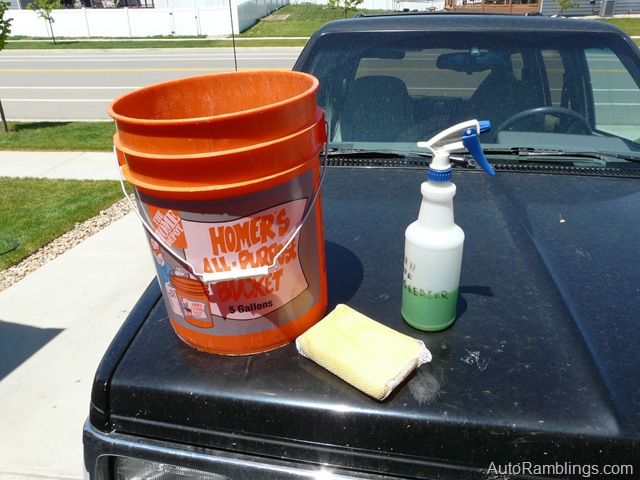 To begin with, I start out by using a diluted degreaser to break down any old residual wax and whatever from the previous owners care. A bucket of clean water, a bug sponge, and a bottle of degreaser is used in this step. First, apply the water and spray a light coat of degreaser. Scrub it down with the bug sponge. You can use a little downward force to make sure you bring up the build-up of crud. Remember, any micro abrasions you might cause during this process will be buffed out during the stages. After scrubbing down and getting as much as I can out of the hood, I do a through rinsing. Next I hit it with some car wash soap. For instances where you are going to clean and remove anything on the paint, Detail Kings Very Berry car wash soap will do a decent job. When doing routine washing, I found that Meguiars Gold Class Car Wash shampoo and Conditioner does a great job of lifting dirt off the paint and gently cleaning. The conditioning part is the plus with this product. It helps maintain the wax or sealant you already have on the paint. I Put a small amount of the soap in a bucket with clean water and use the same bug
 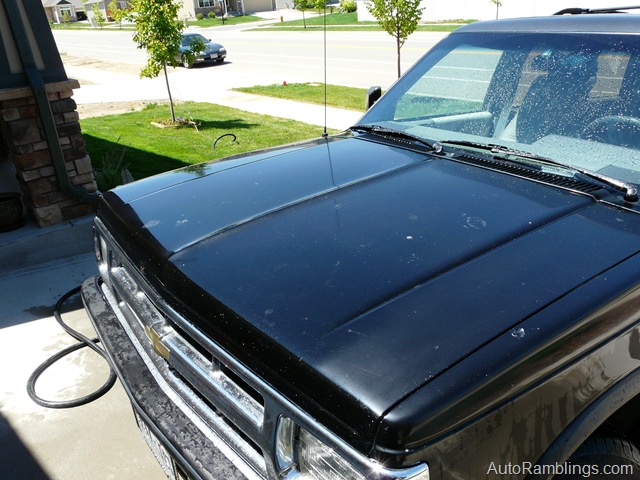 sponge. You get a goodly amount of suds that help to float the grime away. After a good rinsing you begin to see some improvement with only the cleaning step. The only thing I did not do that is usually the last part of the cleaning process is to use detailing clay. Normally, I use a medium grade. Clay is another item you have to be careful with. Most importantly, make sure the clay does not have any abrasive contaminants embedded in it. If so, toss it and get a new bar. You will save yourself a lot of grief by not taking chances with a bad bar of clay. You can easily create a lot more work for yourself if you are not careful. Again, seek advice. My suggestion is to follow the instructions carefully and pay attention.
Process 2 – Paint Correction (Polish and Glaze)
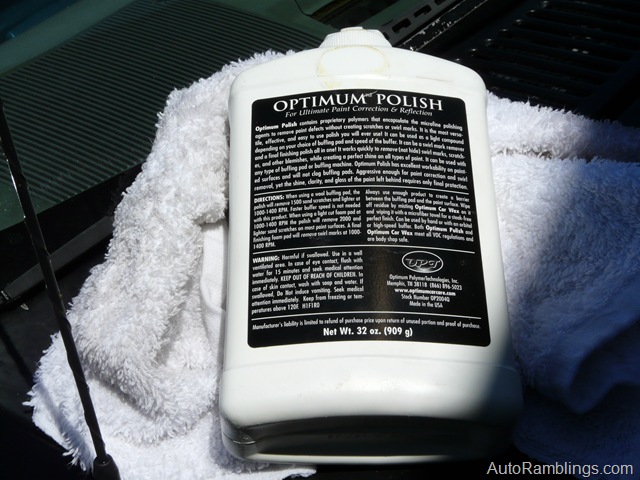
There are a lot of good compounds and polishes on the market. If you work in a detail shop, you have a plethora of grades and types you deal with. I started out having several compounds and polishes and realized I had way too many different products I carted around when doing mobile detailing. Most of the time, I went to the same two or three products. Now, don’t get me wrong, there is a time and a place for a good compound. I figure that when you have to go at it with a coarse compound, you might not be up to the task. Having an indoor setup with good lighting is the best environment when dealing with that level of correction. I have heard of mobile detailing techs that do quite well in any situation. I just was not looking for that kind of work from a mobile perspective. I have turned to a particular product that is easy to work with and is up to the task for every job I have tackled. Optimum Polish, which you can find on detailer product websites and now Amazon. This bottle in the picture is the original formula. I do believe it is called Optimum II now.
Follow these links to a couple of good videos that shows multiple stages with just Optimum polish and several grades of pads:
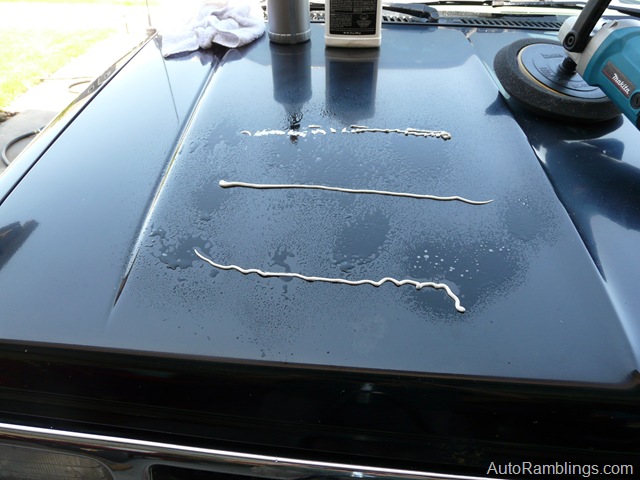 I don’t tout products on a regular basis, but I highly recommend Optimum Polish for your personal vehicles. I have had this one bottle for a couple of years and have polished quite a few cars and trucks with it.
Since the paint on my 94 S10 Blazer is in pretty sad shape with bird droppings having etched several areas and some webbing in the finish, I had to be fairly aggressive to begin with. I started with a heavy foam pad. I used Makita rotary buffer. The speed setting is set to 2000 RPM. You don’t want to heat the paint up to much or you take a chance of ruining the finish. I tackled a quarter section at a time. If you watched the videos from the links above, you will see the technique used with a rotary buffer.
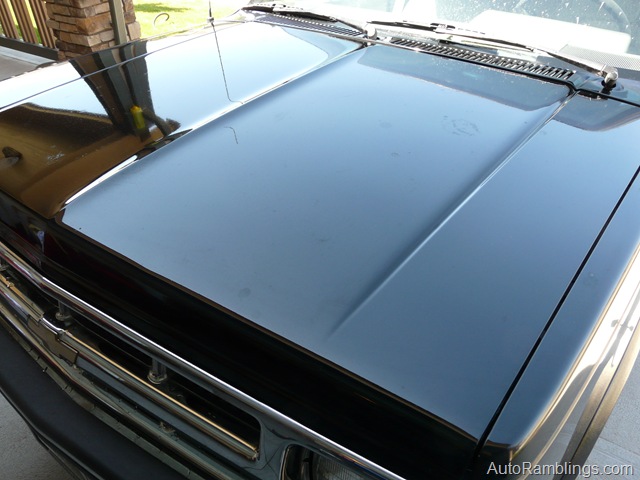
Here is a picture after completing the first stage with a heavy foam pad and the Optimum Polish. You can start to see that reflections are showing very well. There is still several imperfections that are just not possible to remove in this old Chevy’s paint. If I stopped at this stage, you would notice a huge improvement already. However, you would most likely see micro swirl marks after any applied wax or sealant started wearing away.
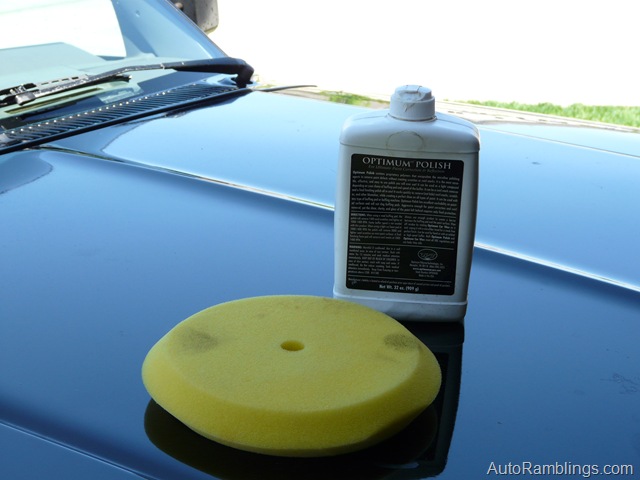
The next step is a yellow pad which is a step down from the black pad. Using the same techniques,
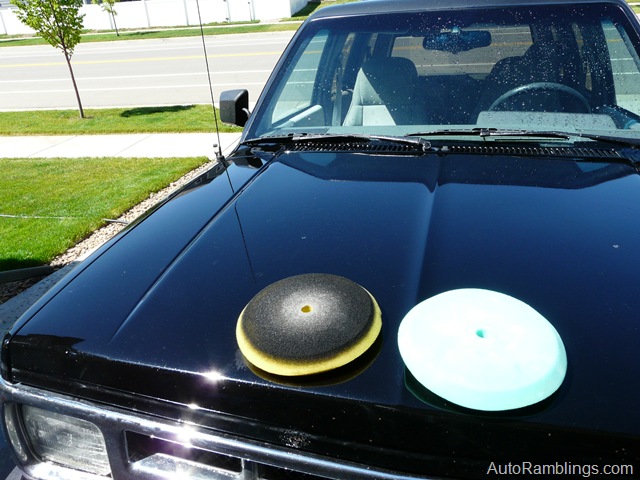
The yellow pad took out quite a bit of crap out of the paint.
The green pad is next. Less aggressive than the yellow pad
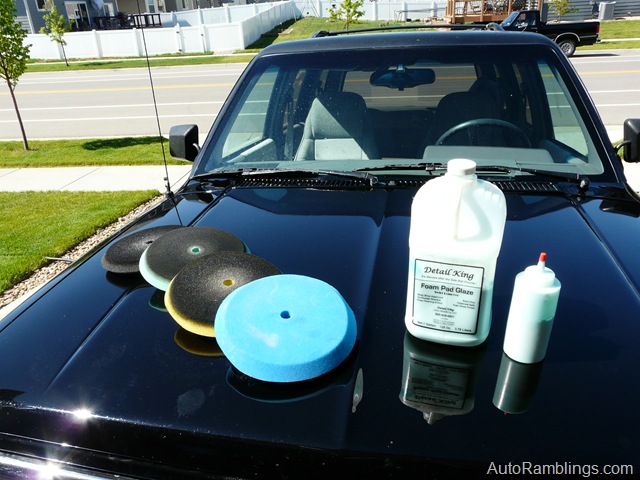
I have finished with the Optimum Polish using three different levels of pads.
The next stage will be utilizing Detail King’s Foam Pad Glaze. A glaze helps to bring out the brilliance of the paint after a good polishing. It also cleans and helps hide micro abrasions on the surface. Most cars with a good finish only require a good pass with some glaze and wax or sealant to make it shine like new again.
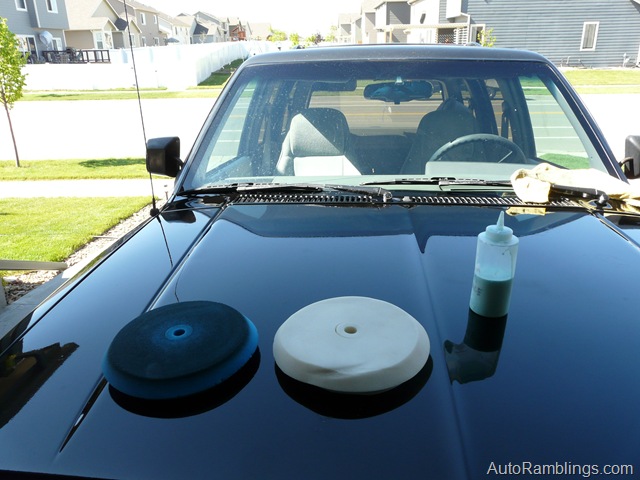
A white pad, which is a final stage for any type of polishing, glazing, and wax or sealant, is used to do a final level of glazing.
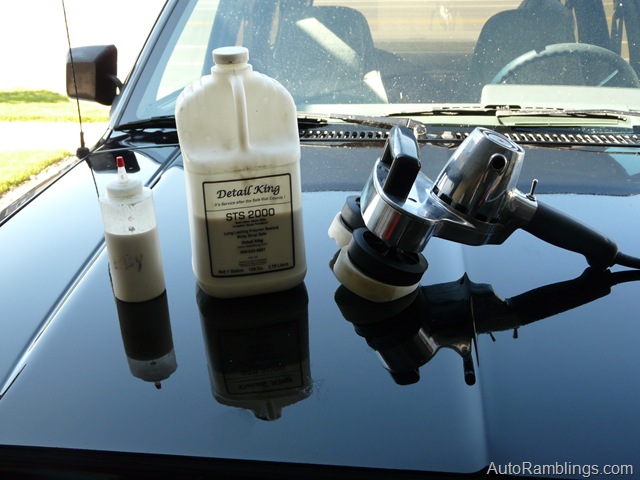
All polishing and glazing is complete. Now it is time to seal up the finish with some Detail King STS2000 Sealant. I am using a Cyclo dual orbital polisher for this final stage.
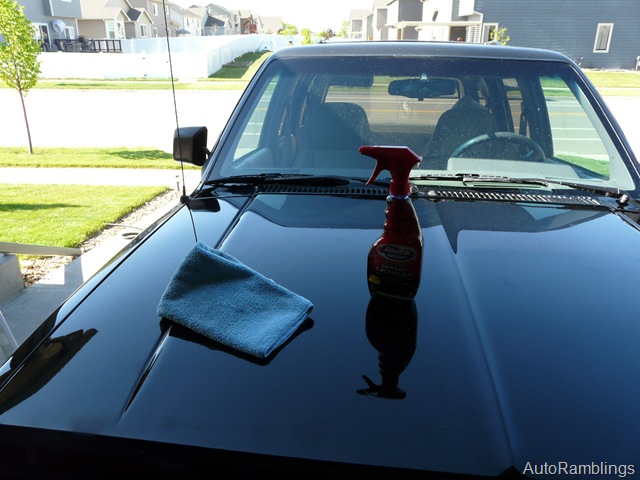
Finally, I do a wipe down with some quick detailer and a micro fiber rag to remove smudges and streaks. I use Black Magic Spray Detailer. You can find it in most stores that carry car wash products. Mequiars has a decent quick detailer, but I find it is harder to get completely wiped off on darker colors. It seems to take a little more elbow grease to get it completely buffed off.
So, we have just breathed new life into this tired old finish on the hood of this 94 Chevy S10 Blazer. On my next post, I will show you what to do when dealing with trim on the vehicle. You can destroy the trim on you car or truck if you don’t do some prepping.

Very good point of view!
Awesome article! I’m really intrigued by this. I can’t wait to see what happens. Hey, have you been keeping up with the latest Subaru news? Check out my Subaru blog here for more information!
Dad, this is incredible. You made it shine again. Way to go. Great insight!